
....Electra 32 / Infrastructure..Electra 32 / As infra-estruturas....
....Electra 32 / Infrastructure..Electra 32 / As infra-estruturas....
....
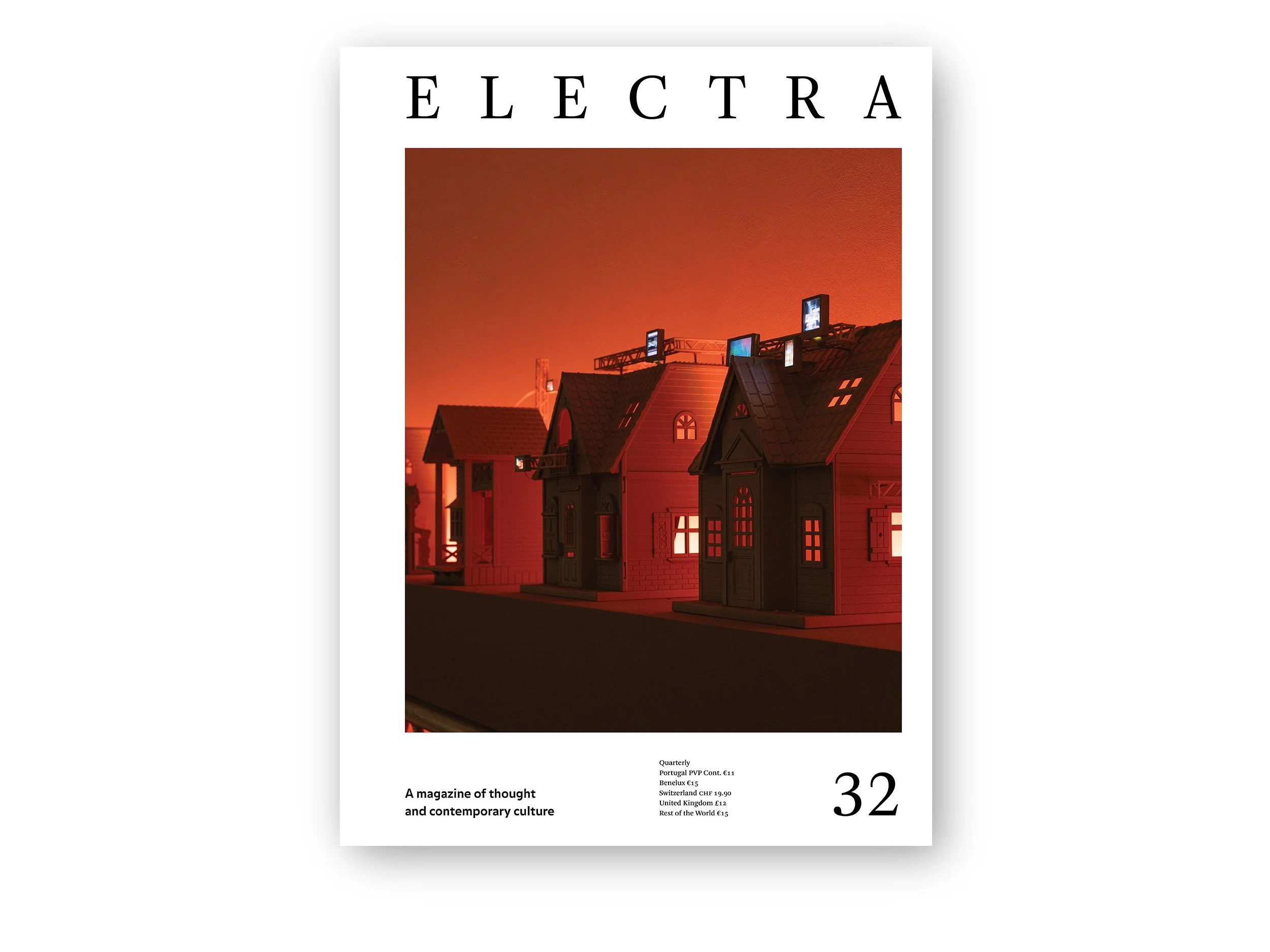
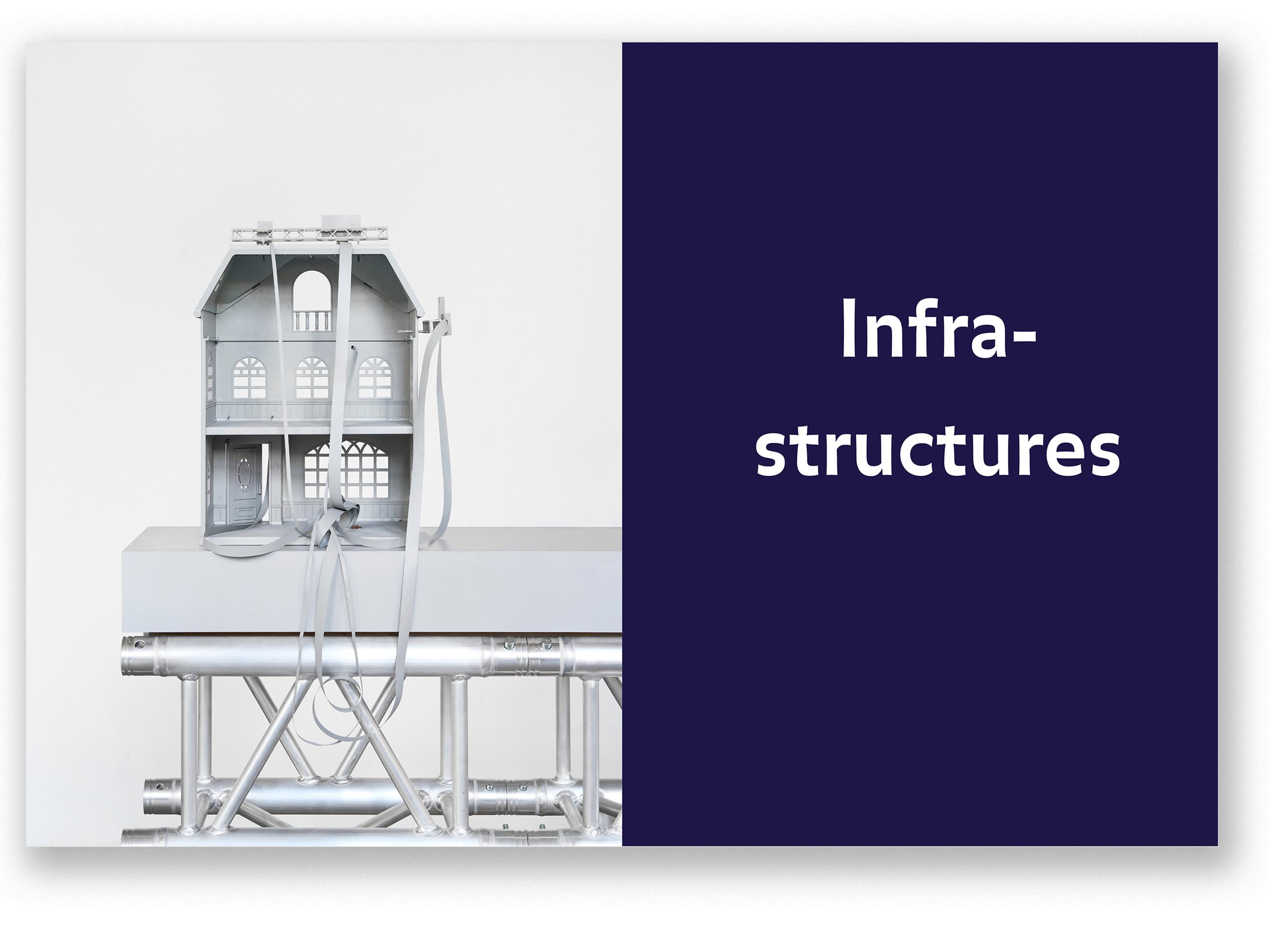
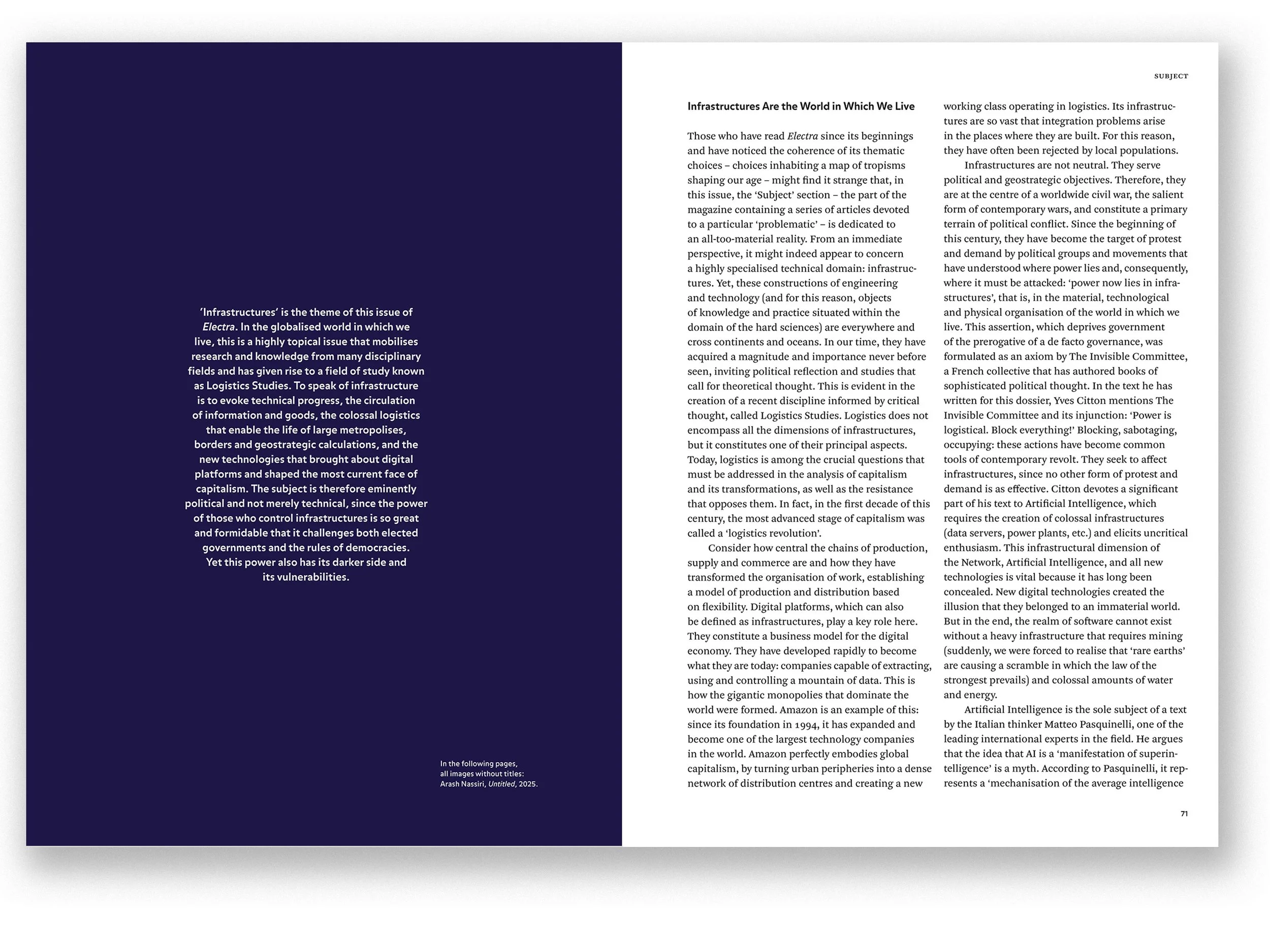
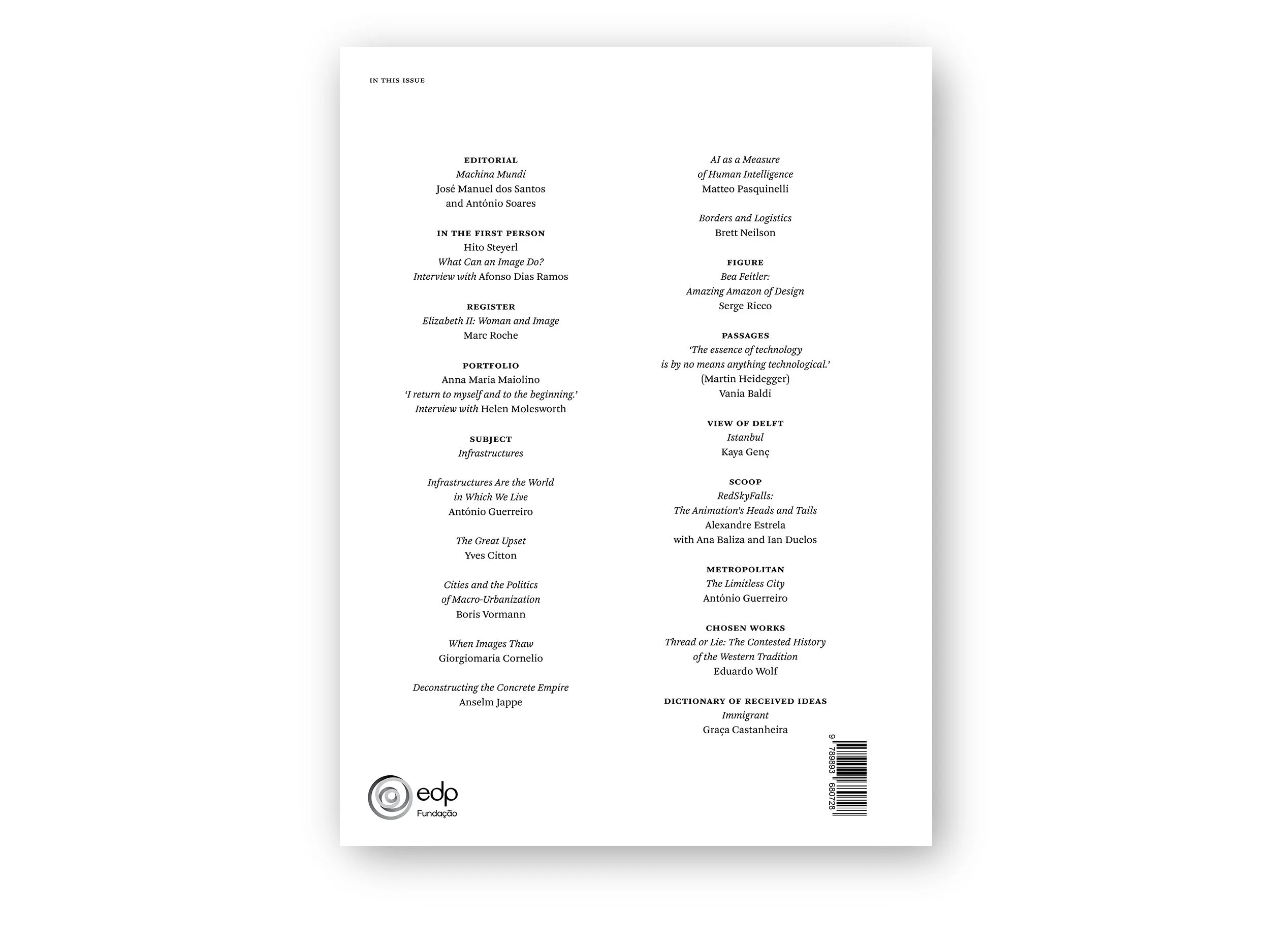
The special feature of Electra issue 32 is ‘Infrastructures’. In a globalised world, this subject has become fundamental for understanding the dynamics that support contemporary societies: from technical progress to the circulation of information and goods, from the logistics that sustain life in major cities to the geopolitical strategies and new technologies that underpin digital platforms. Yet we must not think about infrastructures from a merely technical perspective: we need to examine their increasingly decisive role in systems of political power and economic domination, in regimes of freedom and dependence, in mechanisms of surveillance and control, in apparatuses of administration and oversight. Contributing to this discussion are texts by Yves Citton, Giorgiomaria Cornelio, Anselm Jappe, Brett Neilson, Matteo Pasquinelli and Boris Vormann.
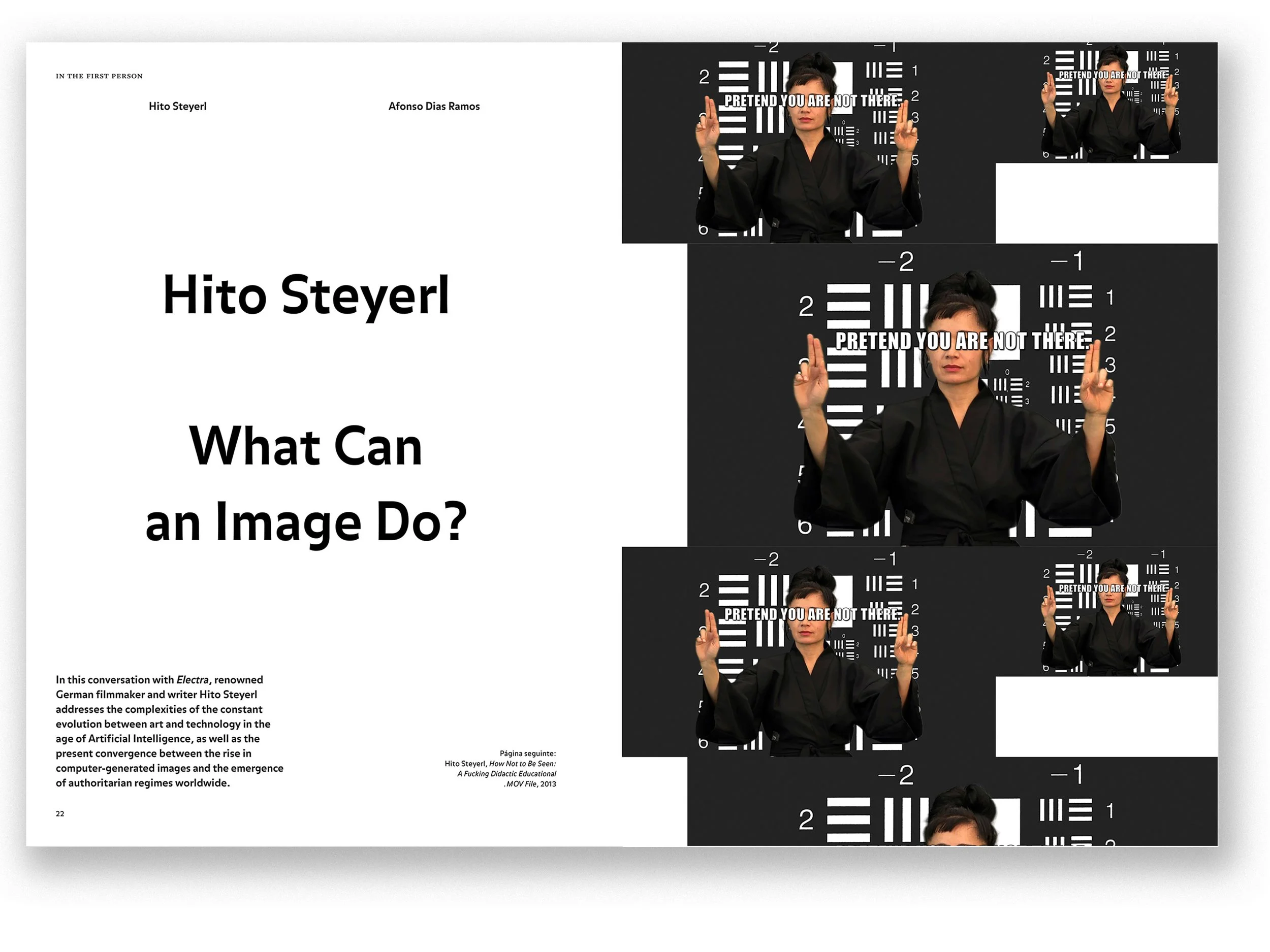
‘In the First Person’ features an interview between Afonso Dias Ramos and renowned German filmmaker, artist and author Hito Steyerl, where she reflects on the complexities of the constant metamorphosis of art, images and technology in the age of Artificial Intelligence.
Anna Maria Maiolino, an acclaimed artist of Italian origin based in Brazil, who received the Golden Lion at the Venice Art Biennale in 2024, is the author of this issue’s Portfolio, where she brings together a selection of her works accompanied by an interview with American curator Helen Molesworth as part of the project The Forgotten Her Story.
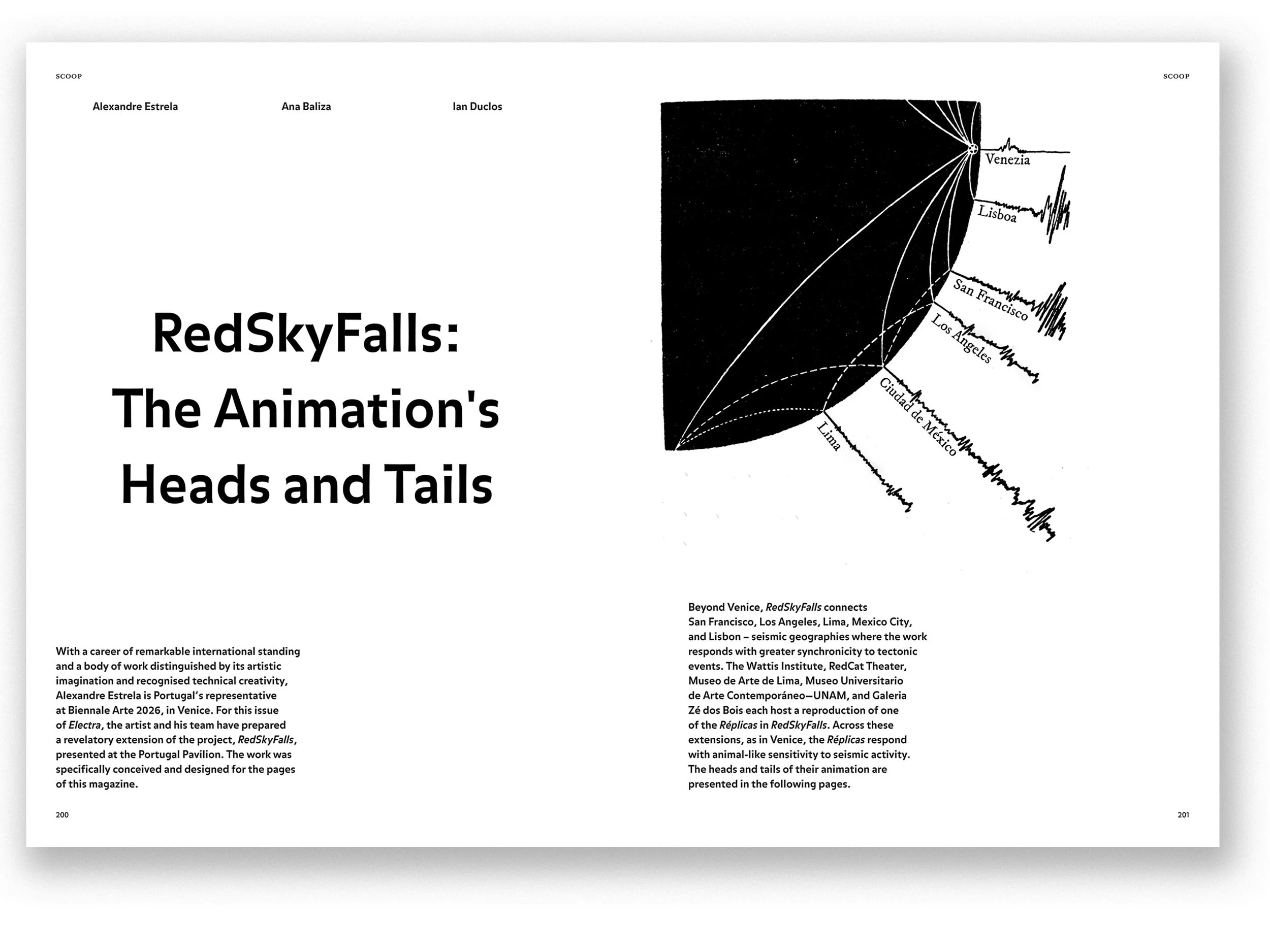
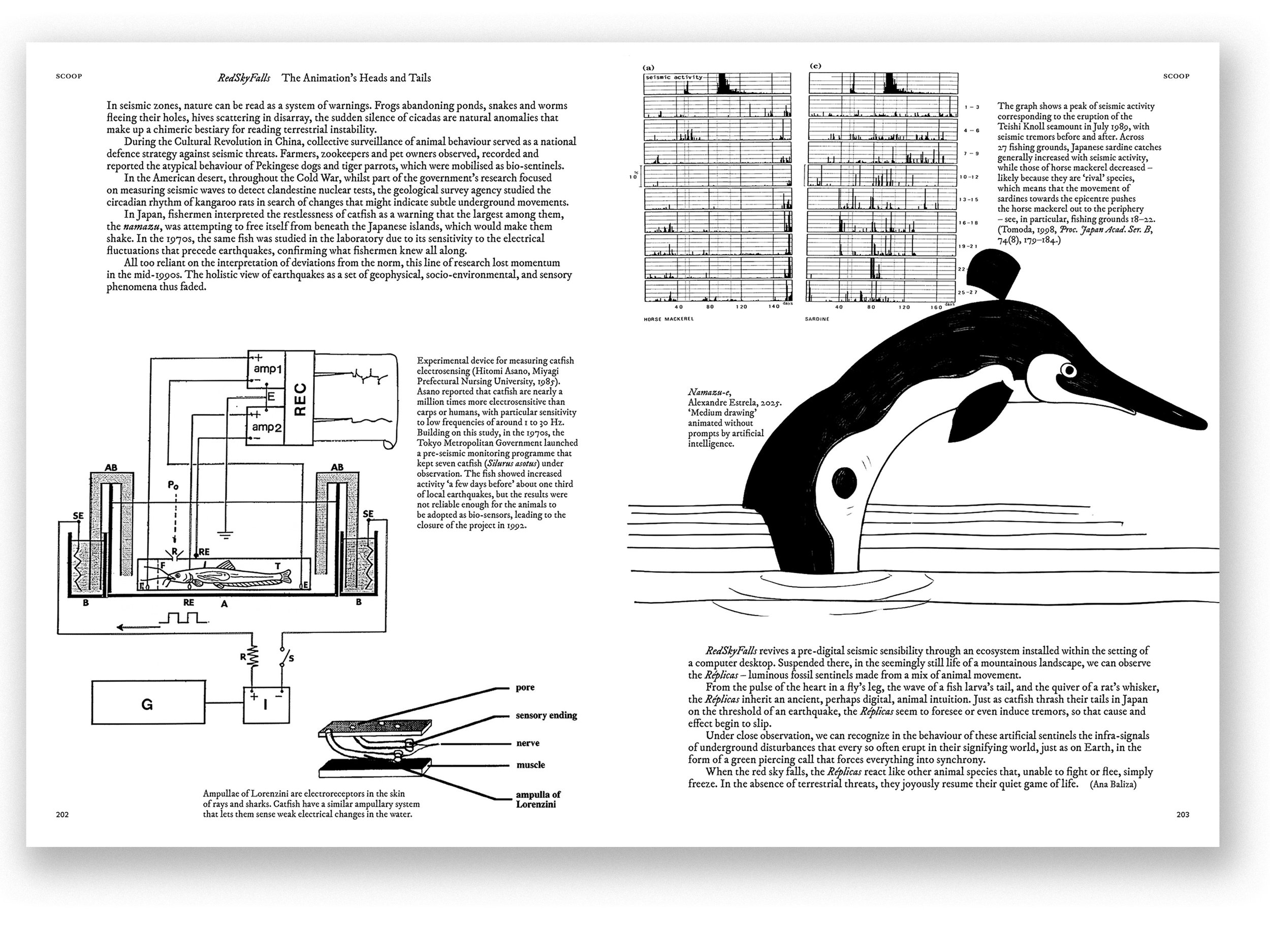
With an internationally acclaimed career and a body of work characterised by his striking artistic imagination and technical creativity, Alexandre Estrela was the artist chosen to represent Portugal at the 2026 Venice Art Biennale. For this issue’s ‘Scoop’ section, he and his team have prepared an extension of the RedSkyFalls project to be shown in the Portuguese Pavilion, conceived and graphically structured specifically for the pages of the magazine.
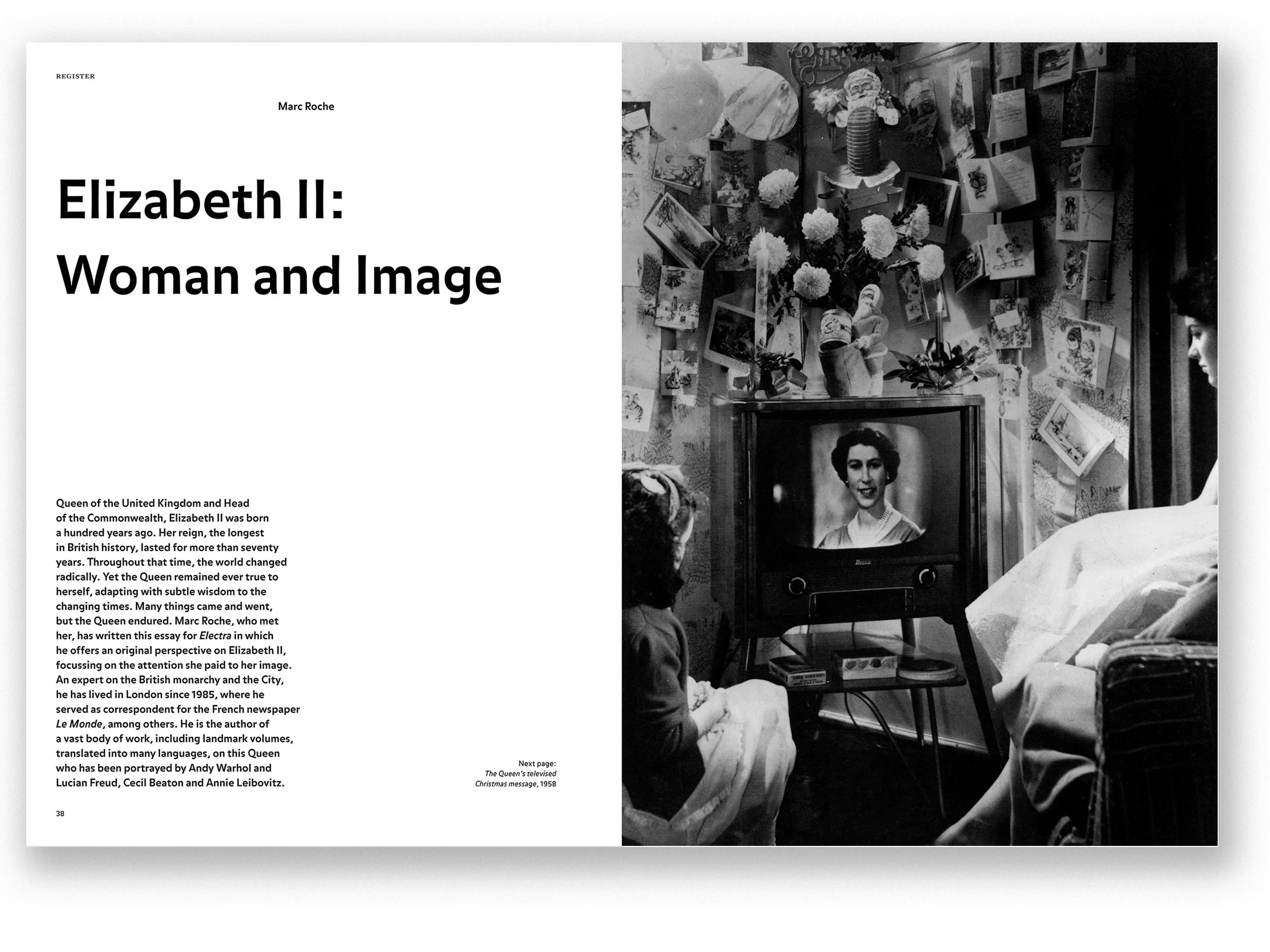
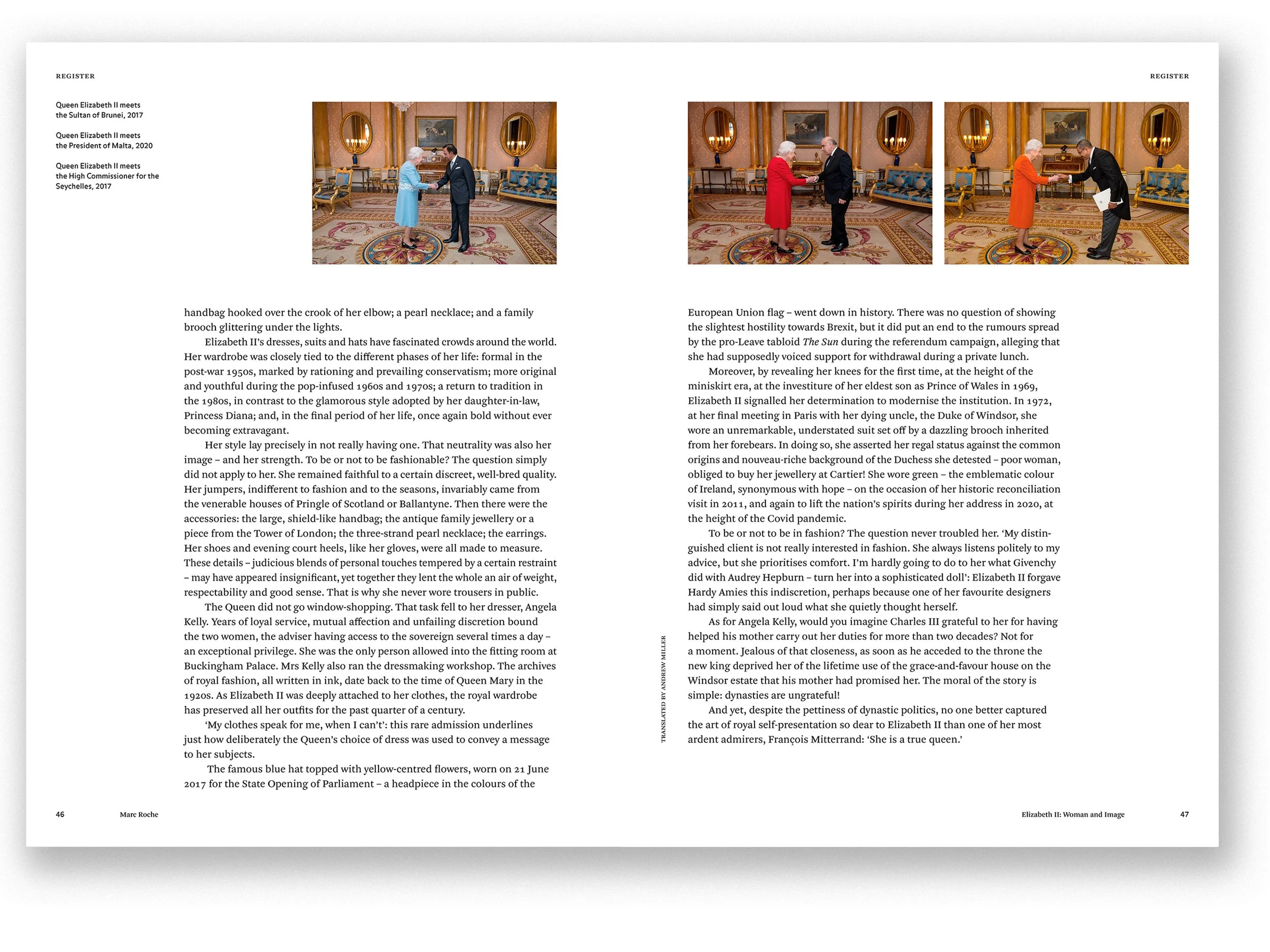
Elizabeth II, Queen of the United Kingdom and Head of the Commonwealth, was born a hundred years ago. Her reign, the longest in British history, lasted more than seventy years, during which the world changed radically; yet she always remained true to herself. Journalist Marc Roche, who met her, has written an article for Electra focusing on the Queen’s careful attention to her public image.
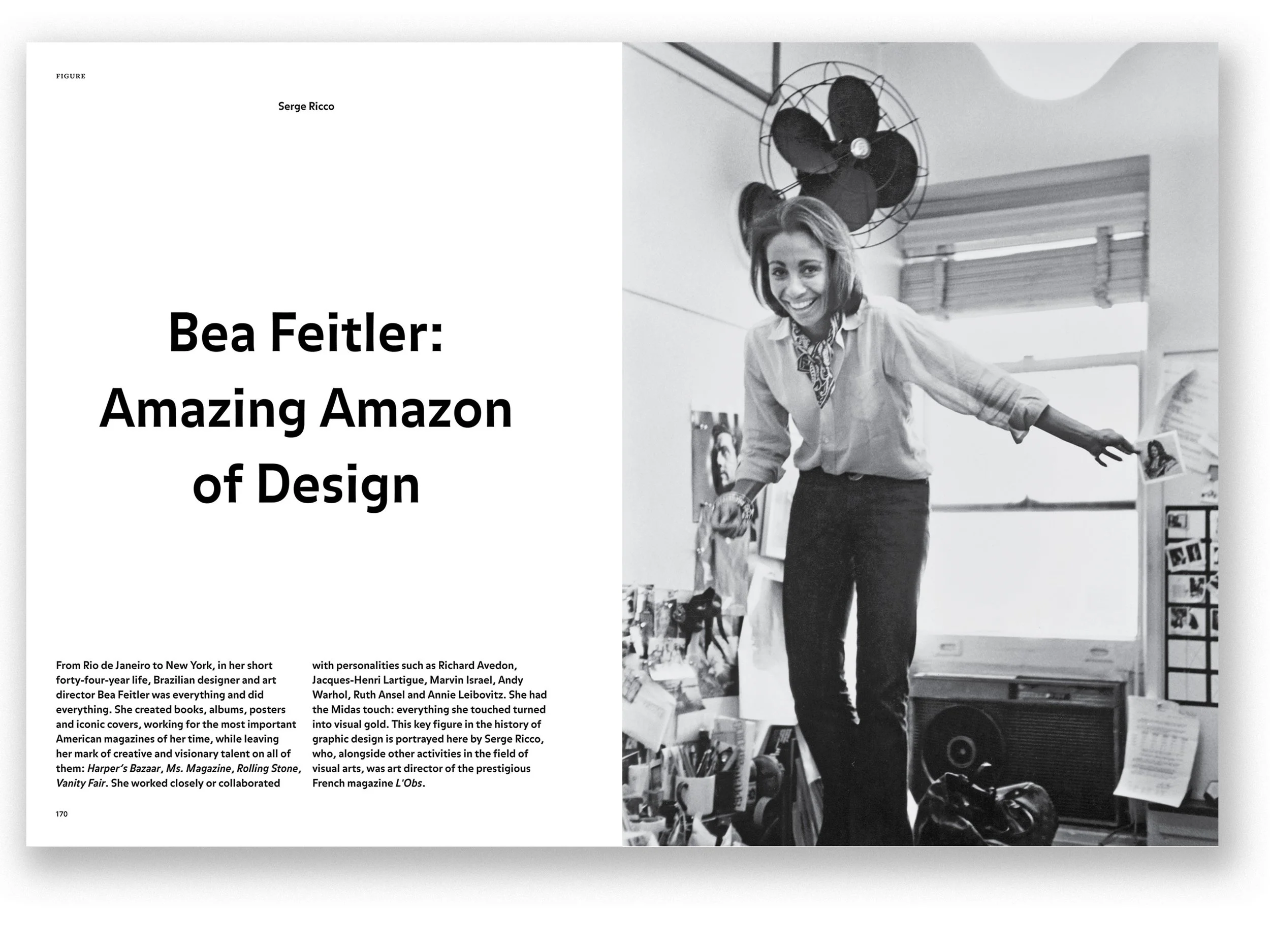
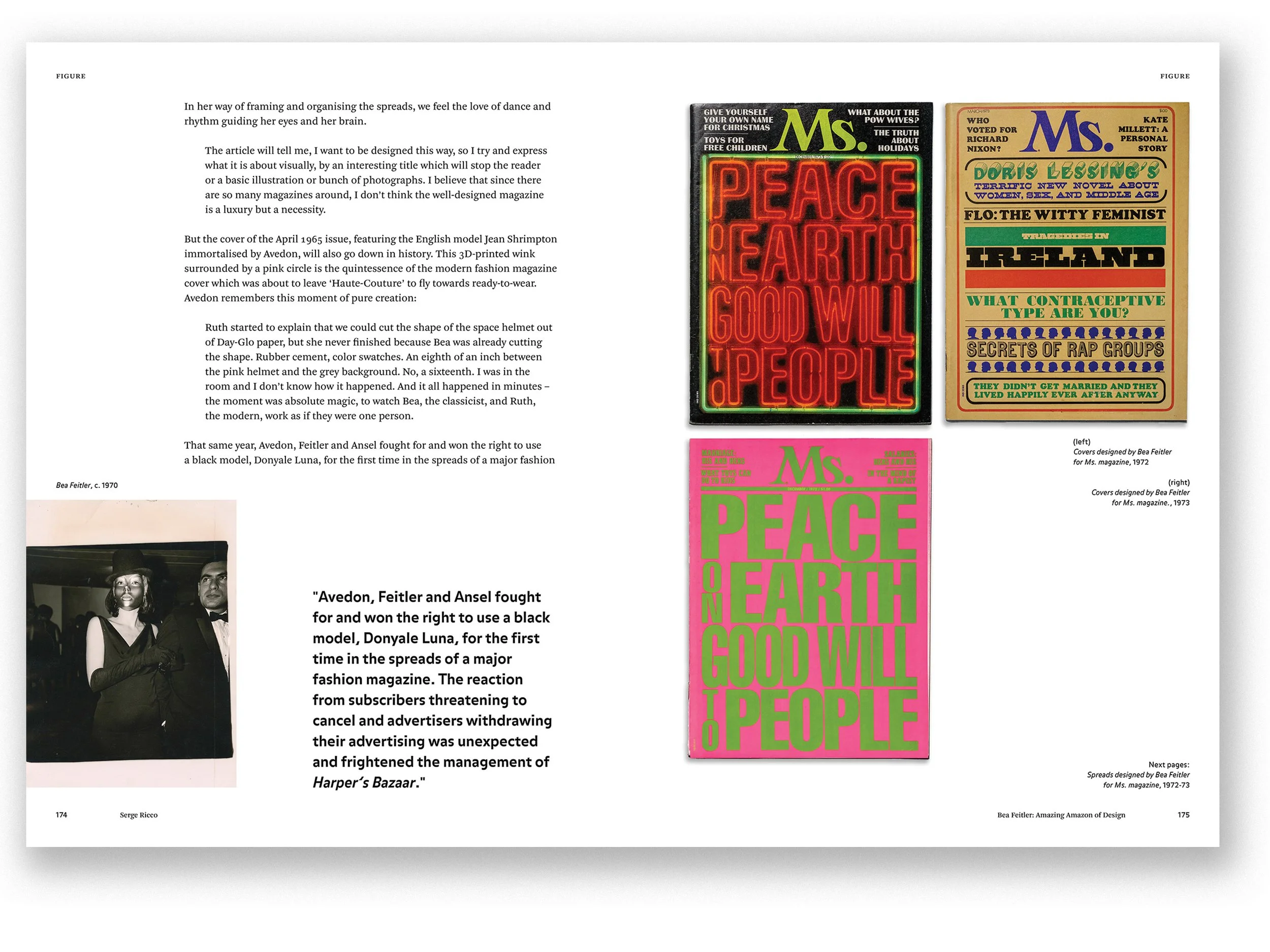
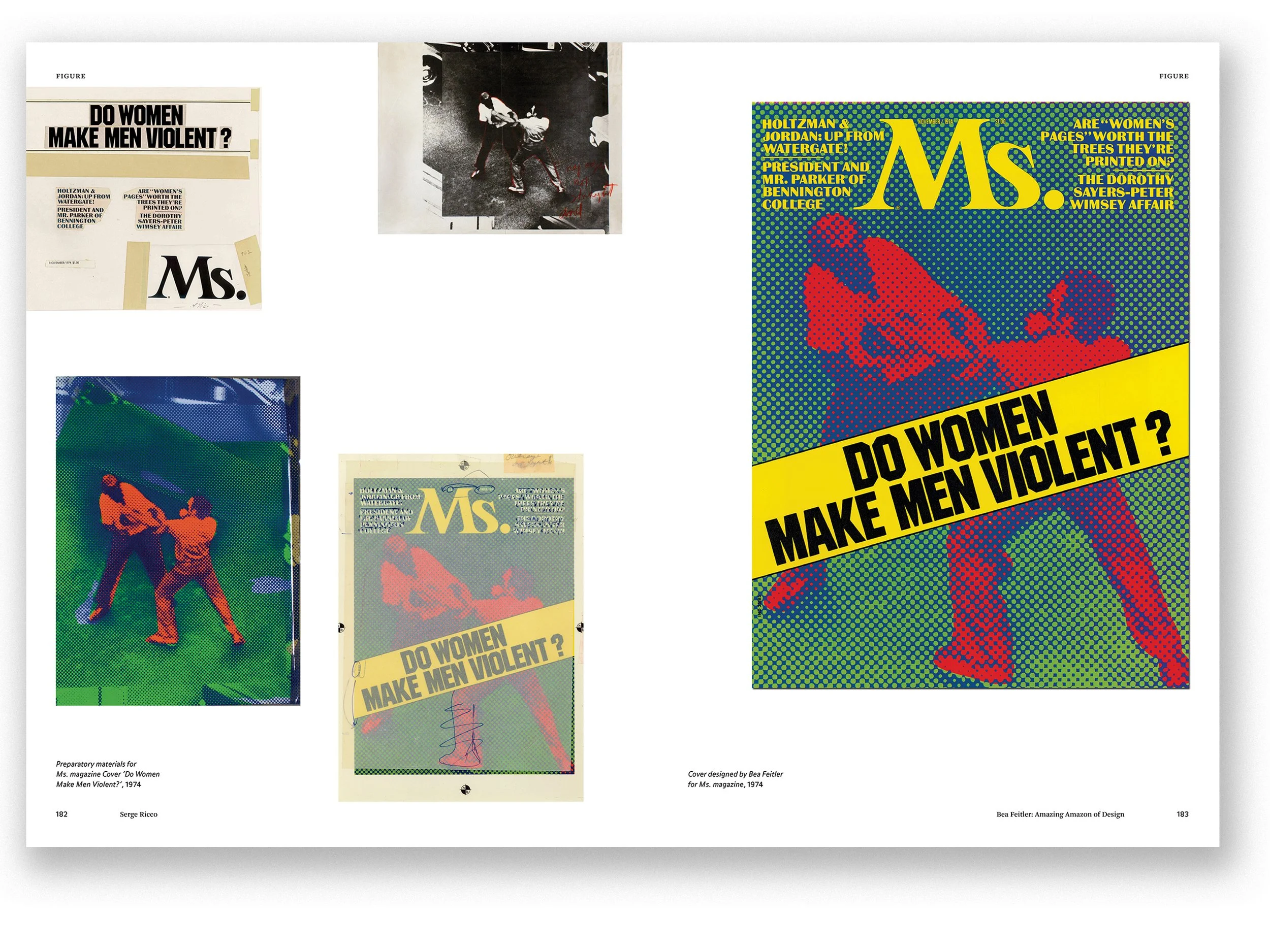
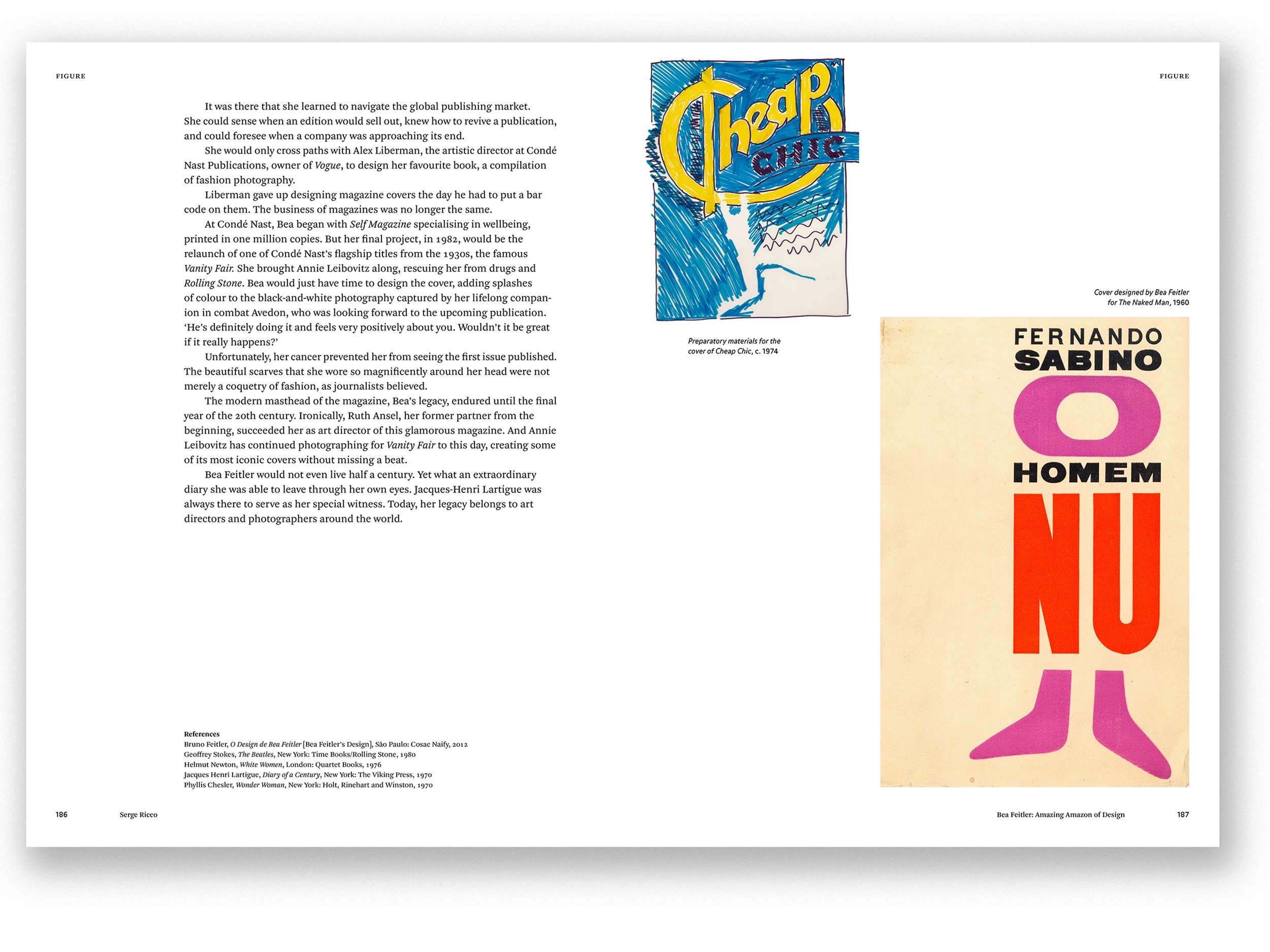
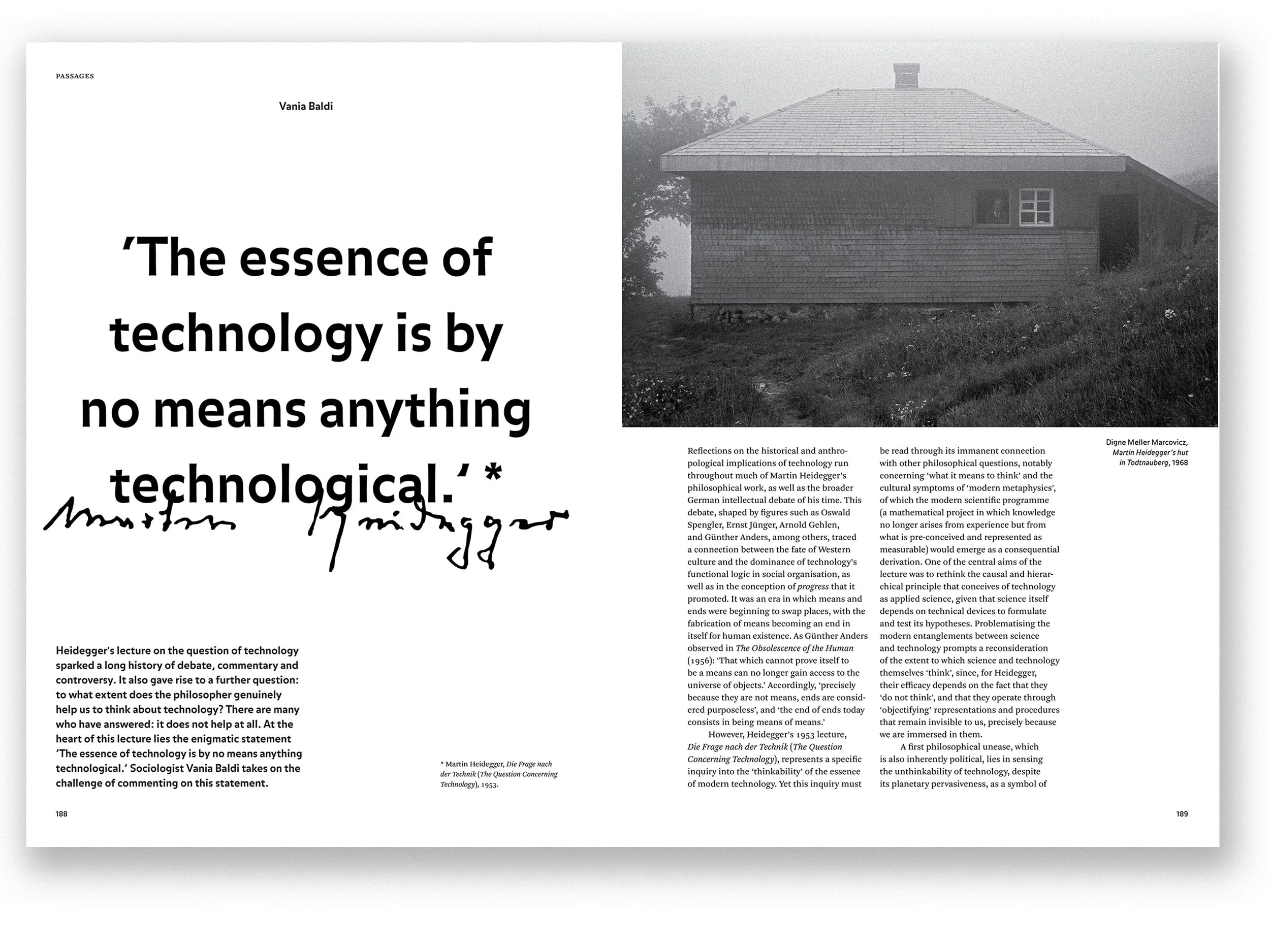
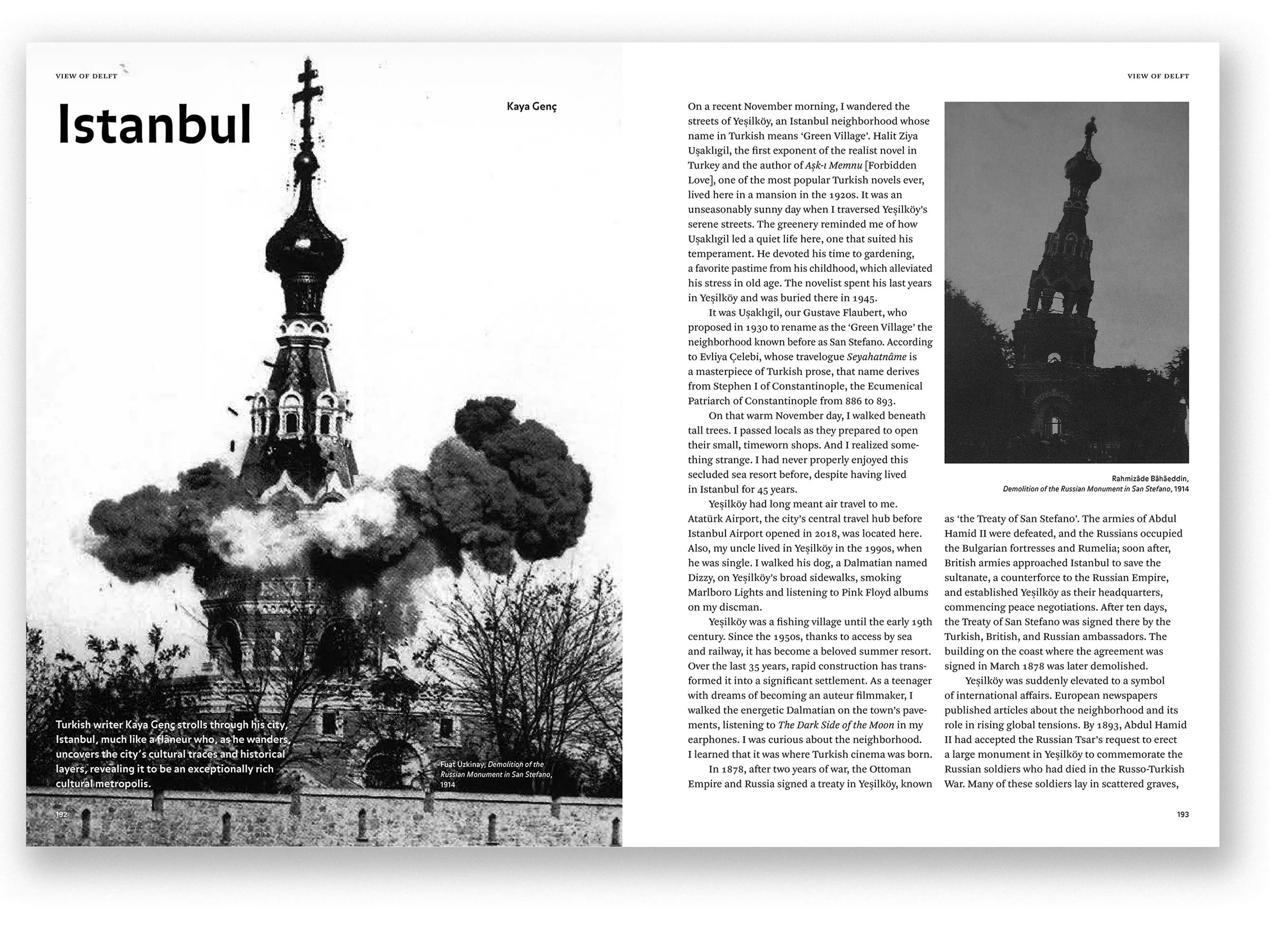
Also in this issue, art director Serge Ricco profiles Bea Feitler, a key figure in the global history of graphic design who left her creative mark on the most important American magazines of her time: Harper’s Bazaar, Ms., Rolling Stone and Vanity Fair; Turkish writer and journalist Kaya Genç takes a stroll through his city, Istanbul, revealing a rich cultural metropolis; Brazilian philosopher Eduardo Wolf offers a critical reflection on the relevance (and irrelevance) of the concept of the ‘Western tradition’ following the publication in the US of The Golden Thread: A History of the Western Tradition, by James Hankins and Allen C. Guelzo; sociologist Vania Baldi examines a quote by Martin Heidegger regarding technology; António Guerreiro writes about the contemporary city as an urban space without limits; and filmmaker and columnist Graça Castanheira reflects on the word ‘immigrant’.
.
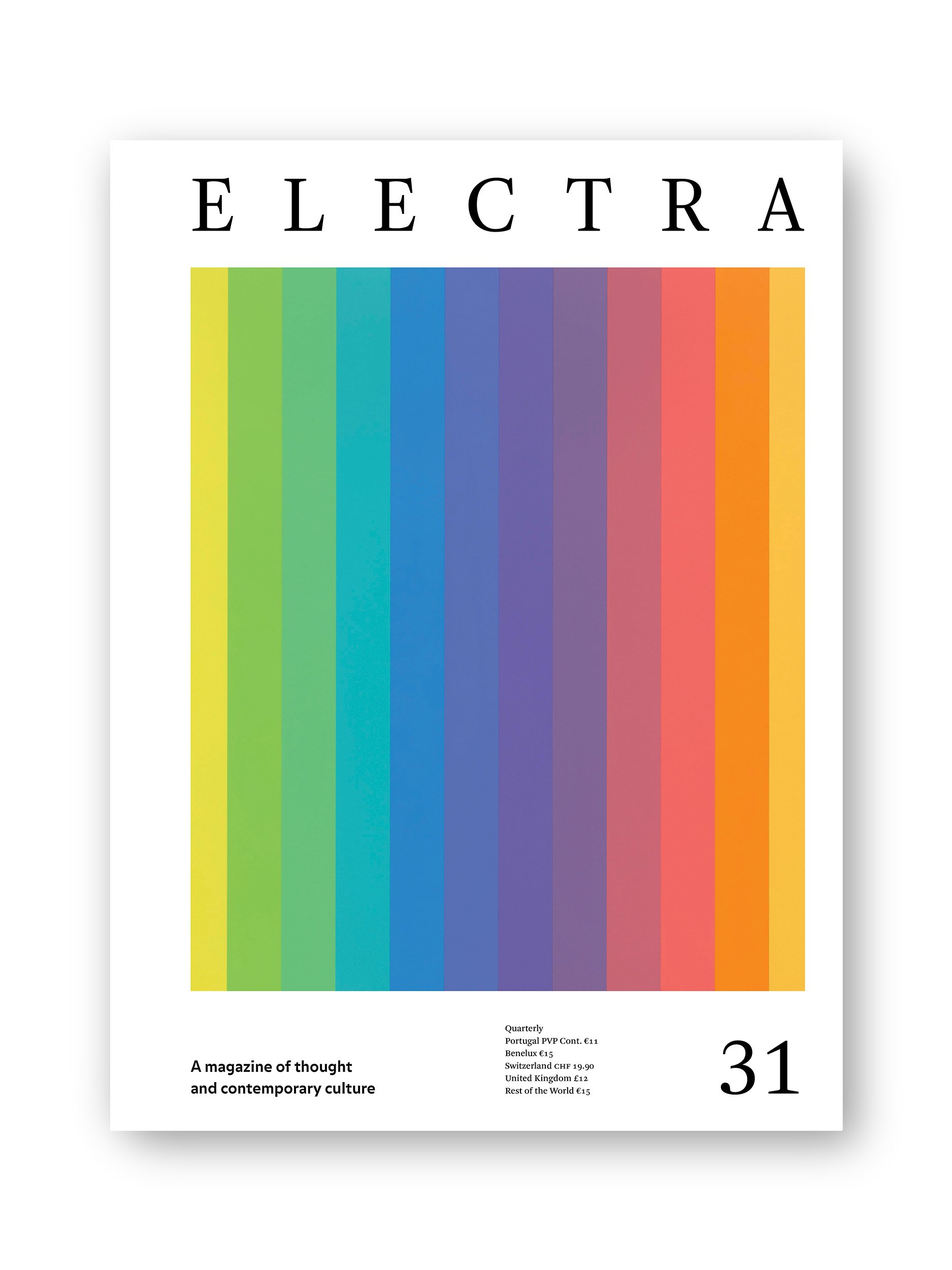
Softcover, 27 x 20 cm, 240 pages
—
..
“As infra-estruturas” são o tema do dossier central do número 32 da Electra. Num mundo globalizado, o assunto tornou-se fundamental para compreender as dinâmicas que sustentam o funcionamento das sociedades contemporâneas: do progresso técnico à circulação de informação e mercadorias, da logística que permite a vida nas grandes metrópoles às estratégias geopolíticas e às novas tecnologias que deram origem às plataformas digitais. Mas pensar as infra-estruturas não é apenas uma reflexão técnica: é também procurar entender o seu lugar cada vez mais determinante nos sistemas de poder político e de domínio económico, nos regimes de liberdade e de dependência, nos dispositivos de vigilância e controlo, nos aparelhos de administração e nos mecanismos de fiscalização. Para esta reflexão contribuem os textos de Yves Citton, Giorgiomaria Cornelio, Anselm Jappe, Brett Neilson, Matteo Pasquinelli e Boris Vormann.
Na secção "Primeira Pessoa", é entrevistada a reconhecida cineasta, artista e autora alemã Hito Steyerl que, numa conversa conduzida por Afonso Dias Ramos, nos fala sobre as complexidades da metamorfose constante da arte, das imagens e da tecnologia na era da Inteligência Artificial.
Anna Maria Maiolino, consagrada artista de origem italiana radicada no Brasil, que recebeu, em 2024, o Leão de Ouro da Bienal de Arte de Veneza, é a autora do Portfolio desta edição. Para as páginas da Electra reuniu um conjunto de trabalhos seus, acompanhado de uma entrevista realizada pela curadora norte-americana Helen Molesworth no âmbito do projeto The Forgotten Her Story.
Com uma carreira de notável projecção internacional e uma obra de forte imaginação artística e reconhecida criatividade técnica, Alexandre Estrela representa Portugal na Bienal de Arte de Veneza de 2026. Para a secção Furo desta edição, o artista e a sua equipa prepararam uma extensão-revelação do projeto RedSkyFalls, apresentado no Pavilhão de Portugal, concebida e estruturada graficamente para as páginas da revista.
Isabel II, Rainha do Reino Unido e chefe da Commonwealth, nasceu há cem anos. O seu reinado, o mais longo da história britânica, durou mais de setenta anos, ao longo dos quais o mundo mudou radicalmente; mas ela manteve-se sempre fiel a si mesma. O jornalista Marc Roche, que a conheceu, escreve para a Electra um artigo centrado no cuidado da rainha com a sua imagem.
Ainda nesta edição o director de arte Serge Ricco retrata Bea Feitler, figura fundamental da história mundial do design gráfico e que deixou marca do seu talento criador nas mais importantes revistas americanas do seu tempo, Harper’s Bazaar, Ms., Rolling Stone e Vanity Fair; o escritor e jornalista turco Kaya Genç passeia pela sua cidade, Istambul, e revela uma riquíssima metrópole cultural; o filósofo brasileiro Eduardo Wolf pensa criticamente a pertinência e a impertinência do conceito de «tradição ocidental», a propósito da publicação, nos EUA, da obra The Golden Thread: A History of the Western Tradition, de James Hankins e Allen C. Guelzo; o sociólogo Vania Baldi comenta uma citação de Martin Heidegger sobre a questão da técnica; António Guerreiro escreve sobre a cidade contemporânea como um espaço urbano sem limites; e a realizadora e cronista Graça Castanheira reflecte sobre a palavra “Imigrante”.
Capa mole, 27 x 20 cm, 240 páginas
—
....
“....We currently have generative art and generative image-making which, in many cases, are also tied to the new, emerging authoritarian regimes. ..A IA generativa tornou-se uma espécie de estilo dos muitos regimes autoritários novos. ....”
“....It is likely that AI will lead to a downgrading of the middle rather than the working class. ..É provável que a IA conduza mais depressa à desclassificação da pequena burguesia do que da classe operária. ....”
“....If the political is now infrastructural, it certainly is not democratic. ..Se o político é hoje infra-estrutural, não é certamente democrático. ....”
-
....
Director / José Manuel dos Santos
Editor / António Guerreiro
Published by Fundação EDP
Spring 2026Softcover, 27 x 20 cm, 24 pages
ISBN 9789893680728..
Director / José Manuel dos Santos
Editor / António Guerreiro
Publicado por Fundação EDP
Primavera 2026
Capa mole, 27 x 20 cm, 240 páginas
ISBN 9789893680711....



....
3 Issues + 1 Free (1 Year)
Subscription is valid from the next or current issue only.
Choose your option below.
Electra is an international periodical dedicated to all areas of culture, promoting dialogue between different artistic disciplines, humanistic knowledge and science, cultural theories and practices.
Have Electra at your address!
..
3 Títulos + 1 Grátis (1 Ano)
Envios Gratuitos para Portugal
Assinaturas começam no título seguinte ou corrente.
Escolha a opção que pretende abaixo.
Electra é uma revista internacional de crítica e reflexão cultural, social e política, dedicada às diversas áreas da cultura, promovendo diálogos e oscilações de fronteiras entre disciplinas artísticas, saberes humanísticos e ciência, entre teorias e práticas culturais.
Receba a Electra em sua casa!
....